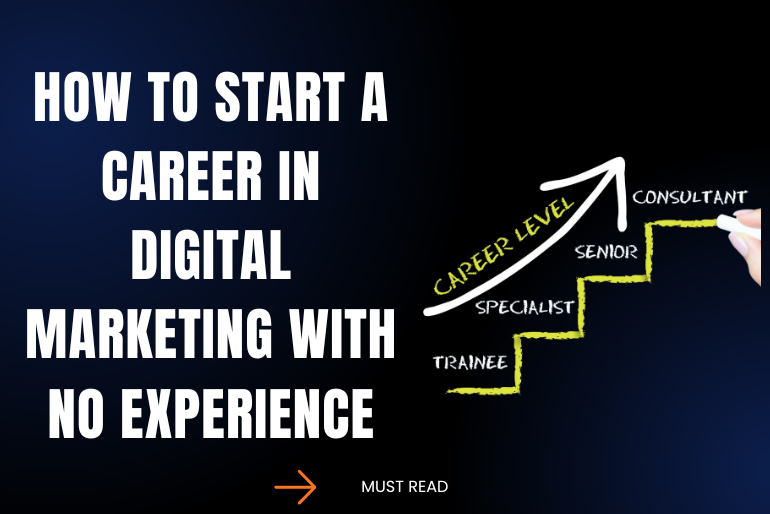
Digital marketing is a practical skill. You learn it by understanding the basics, studying real examples, creating projects, testing strategies, measuring results, and improving over time. Whether you want to promote your own business, work as a freelancer, get a marketing job, build a personal brand, or launch an online store, you can start building digital marketing skills today.
Quick Answer: Can You Start Digital Marketing With No Experience?
Yes, you can start digital marketing with no experience by learning the core concepts, practicing on your own project, creating a basic portfolio, and gaining experience through small campaigns, internships, volunteer work, freelance projects, or personal branding.
A beginner-friendly path looks like this:
- Learn the basics of digital marketing.
- Create a website, blog, social profile, or sample project.
- Practice using free marketing tools.
- Build a portfolio showing your work and results.
- Network with business owners, agencies, and other marketers.
- Keep learning as platforms, tools, and consumer behavior change.
What Is Digital Marketing?
Digital marketing is the promotion of products, services, brands, or ideas through online channels. It helps businesses reach potential customers through search engines, websites, social media, email, online advertising, video content, and other digital platforms.
For example, a local salon owner can use digital marketing to:
- Create a website that appears in Google searches.
- Post hair care tips on Instagram and YouTube.
- Run ads targeting people in a specific city.
- Send email newsletters to potential clients.
- Collect reviews from existing clients.
- Use Google Business Profile to attract local search traffic.
Main Areas of Digital Marketing
Search Engine Optimization (SEO)
SEO is the practice of improving a website so it can appear in search engine results for relevant keywords and questions.
For example, if someone searches for “best digital marketing agency for small businesses,” businesses that have optimized their websites and created useful content may appear in the results.
Content Marketing
Content marketing involves creating helpful, relevant, and valuable content to attract and engage an audience.
Content can include:
- Blog posts
- Articles
- Guides
- Ebooks
- Videos
- Podcasts
- Social media posts
- Email newslet
- Product descriptions
The goal is not simply to publish content. It is to create content that solves problems, answers questions, builds trust, and guides people toward a desired action.
Social Media Marketing
Social media marketing uses platforms such as Instagram, LinkedIn, Facebook, TikTok, YouTube, Pinterest, and X to grow a brand, build a community, drive traffic, and promote products or services.
Social media marketers create content calendars, write captions, produce visual content, analyze engagement, respond to audiences, use hashtags strategically, and sometimes manage paid advertising campaigns.
Email Marketing
Email marketing involves sending useful, relevant messages to people who have subscribed to hear from a business or brand.
Common email marketing campaigns include:
- Welcome emails
- Product announcements
- Promotional offers
- Weekly newsletters
- Cart abandonment emails
- Event invitations
- Educational email sequences
- Customer retention campaigns
Paid Advertising
Paid digital advertising involves paying to promote content, products, or services online. Common platforms include Google Ads, Meta Ads, LinkedIn Ads, YouTube Ads, and TikTok Ads.
Analytics and Reporting
Digital marketing is data-driven. Marketers use analytics to understand what is working, what is not, and where improvements are needed.
Important metrics may include:
- Website visitors
- Organic traffic
- Click-through rate
- Conversion rate
- Cost per lead
- Cost per acquisition
- Email open rate
- Engagement rate
- Return on ad spend
- Sales and revenue
Learning how to read data is one of the most useful skills you can develop as a digital marketer.
Why Digital Marketing Is a Good Career for Beginners
Digital marketing is a strong career option because businesses of all sizes need online visibility. From local shops and startups to global companies, organizations need people who can help them attract customers, build trust, create content, and grow online.
Another benefit is flexibility. Digital marketing can lead to many career paths, including:
- SEO specialist
- Content writer
- Social media manager
- Email marketing specialist
- Paid ads specialist
- Digital marketing executive
- Marketing analyst
- Brand manager
- Freelance digital marketer
Step 1: Learn the Core Basics of Digital Marketing
Do not start by trying to learn every tool, strategy, and platform. Begin with a basic understanding of how digital marketing works.
Focus on these foundational concepts:
- Target audience
- Customer journey
- Brand positioning
- Marketing funnel
- Search intent
- Content strategy
- Website conversion
- Social media engagement
- Email list building
- Basic analytics
- Lead generation
- Calls to action
Understand Your Target Audience
A target audience is the group of people most likely to need, want, or buy a product or service.
For example, the target audience for a premium fitness coaching service may include working professionals aged 25 to 45 who want personalized workout plans, accountability, and nutrition guidance.
Before creating content or launching campaigns, marketers need to understand:
- Who is your audience
- What problems is your audience facing
- What goals they have
- Which platforms they use
- Which type of content they consume
- What objections stop them from buying your product
Step 2: Choose One Digital Marketing Skill to Start With
Trying to become an expert in SEO, social media, content marketing, paid ads, email marketing, analytics, video, and web design all at once can lead to burnout.
Start With SEO If You Enjoy Research and Writing
SEO may be a good fit if you enjoy researching topics, analyzing search behavior, writing useful content, improving websites, and solving problems.
Begin by learning:
- Keyword research
- Search intent
- On-page SEO
- Title tags and meta descriptions
- Internal linking
- Basic technical SEO
- Local SEO
- Content optimization
Start With Content Marketing If You Enjoy Writing or Storytelling
Content marketing is ideal if you enjoy writing, explaining topics, interviewing people, building narratives, or turning complex information into useful content.
Practice writing blog posts, landing pages, product descriptions, newsletters, social captions, case studies, and scripts.
Start With Social Media If You Enjoy Creativity and Community Building
Social media marketing may be a good choice if you enjoy content creation, visual storytelling, communication, community engagement, and trends.
Learn how to create a content calendar, write effective captions, understand platform formats, analyze engagement, use short-form video, and build a consistent brand voice.
Step 3: Create Your Own Practice Project
The fastest way to gain digital marketing experience is to create a project of your own. You do not need a customer before you start learning.
Build a simple website, blog, newsletter, niche social media page.
For example, you could create a blog about:
- Healthy recipes
- Budget travel
- Weight gain tips
- Home workouts
- Sustainable fashion
- Career development
- Productivity
Choose a topic you genuinely enjoy because you will need motivation to create consistently.
What to Do With Your Practice Project
Once you have selected a topic, practice real marketing tasks:
- Research relevant keywords.
- Create a simple website or blog.
- Write helpful articles.
- Optimize title tags and headings.
- Create a social media profile.
- Publish useful posts consistently.
- Design simple visual content.
- Learn what topics people respond to.
- Improve pages based on feedback and performance.
This project becomes proof that you understand marketing beyond theory.
Step 4: Learn Free and Beginner-Friendly Tools
You do not need expensive software to start digital marketing. Many free tools are enough for beginners.
Website and Content Tools
- WordPress for building a blog or website
- Google Docs for writing and planning
- Canva for visual content and basic graphic design
- Grammarly for proofreading and writing improvements
SEO and Analytics Tools
- Google Search Console for monitoring search performance
- Google Analytics for tracking website behavior
- Google Trends for finding trending topics
- Google Keyword for basic keyword ideas
- Google Business Profile for local businesses
Social Media Tools
- Meta Business Suite for Facebook and Instagram management
- LinkedIn for professional content and networking
- Buffer or similar scheduling tools for content planning
- Canva for post designs, carousels, and short video edits
- YouTube Studio for analyzing video performance
You do not need to use every tool at once. Learn one tool in each category and improve gradually.
Step 5: Build a Digital Marketing Portfolio
A portfolio is one of the best ways to prove your ability when you have little or no professional experience. Your portfolio should show what you can do, how you think, and the results you have achieved.
You can create a portfolio using a simple website, a Notion page, a Google Drive folder, or a professional PDF document.
Include These Items in Your Portfolio
- A short introduction about yourself and your marketing interests
- Your chosen specialization, such as SEO, content, social media, or paid advertising
- Sample blog articles or website content
- Keyword research examples
- SEO audits or optimization recommendations
- Social media content calendars
- Sample Instagram carousels or LinkedIn posts
- Email newsletter samples
- Landing page copy
- Mock ad campaigns
- Case studies from your personal project
- Results, such as traffic growth, engagement, rankings, subscriber growth, or conversions
If you do not yet have client results, be honest. Show your process, research, planning, content quality, and strategic thinking.
For example, a beginner SEO portfolio case study could explain how you selected keywords, created a content plan, optimized an article, added internal links, improved headings, and tracked impressions in Google Search Console.
AEO: How to Make Your Content Answer-Engine Friendly
AEO stands for Answer Engine Optimization. It focuses on creating content that provides clear, direct answers to questions users ask through search engines, For example, instead of targeting only the keyword “digital marketing,” create content around questions such as:
- “How can I start digital marketing with no experience?”
- “What skills do I need for digital marketing?”
- “Can I learn digital marketing at home ?”
- “How can I create a digital marketing portfolio?”
- “Which digital marketing skill will help beginners first?”
AEO Best Practices
Use these AEO strategies when creating blog posts, landing pages, FAQs, and website content:
- Use question-based headings that match real user searches.
- Write concise answers before expanding with detailed explanations.
- Use short paragraphs, bullet points, and numbered steps.
- Add a dedicated FAQ section.
- Add relevant structured data, such as FAQ schema or Article schema.
- Use clear and natural language.
- Keep important information updated.
- Build trust with author information, accurate claims, and transparent business details.
AEO improves user experience because readers can find answers quickly. It also helps search systems understand what your content is about.
Common Mistakes Beginners Should Avoid
Starting digital marketing is exciting, but some common mistakes can slow your progress.
Avoid these mistakes:
- Trying to master every marketing channel at once
- Copying their competitors without understanding their strategy
- Focusing only on followers and likes instead of business outcome
- Posting content without knowing about the target audience
- Ignoring SEO while relying entirely on social media
- Publishing content inconsistently
- Failing to track performance
- Expecting instant results
- Avoiding real projects because you do not feel ready
- Not building a portfolio
The best way to avoid these mistakes is to stay focused, learn continuously, and treat each project as an opportunity to improve.
Frequently Asked Questions
Can I learn digital marketing with no experience?
Yes. You can learn digital marketing with no experience by studying the basics, practicing on personal projects, using free tools, building a portfolio.
Do I need a degree to work in digital marketing?
A degree can be helpful, but it is not required everywhere . Many employers and clients care more about your skills, portfolio, results, communication skills.
Which digital marketing skill should I learn first?
Start with SEO if you enjoy research and writing, content marketing if you enjoy storytelling, social media if you enjoy community and creativity.
How long does it take to learn digital marketing?
You can learn the basics in a few weeks or months, but becoming confident takes consistent practice. Digital marketing is always evolving, so learning is an ongoing process rather than a one-time task.
Can I become a freelance digital marketer with no experience?
Yes, but first build your skills and portfolio. Start with small projects, offer beginner-friendly services, work with local businesses or nonprofits, and gather testimonials and case studies.
What is the easiest digital marketing skill to learn?
Content writing and social media management are often accessible starting points because you can practice them quickly. However, the easiest skill for you depends on your interests, strengths, and willingness to learn.
How can I get my first digital marketing client?
Start by building a portfolio, networking online, reaching out to small businesses, offering a limited service, applying to freelance platforms, and asking your personal network if anyone needs marketing support.
Conclusion
You do not need experience to start digital marketing—you need curiosity, consistency, and a willingness to practice. The best digital marketers are not people who know every platform or tool. They are people who understand audiences, create useful content, test ideas, measure outcomes, and keep improving.
Digital marketing is a field where action creates experience. Your first blog post, social media campaign, website audit, email newsletter, or client project may not be perfect, but each one will teach you something valuable.
Leave a Reply